
The Geography of Slavery in Northern Kentucky
The proportions of enslaved people were generally lower in Kentucky than in states of the deep south, but at their peak in the 1820s, those in bondage reached over 29% of the state population (Klotter and Thompson 161). Practices of enslavers also varied significantly across the state, with the Ohio River, population centers, and the tenability of soil all factoring. While Mason and Boone counties offered river bottoms and upland prairies suited to larger plantation farming, counties inland of the Ohio River were more heavily wooded. Census records show slavery organized proportionally to this landscape, with over 55% of the enslaved of northern Kentucky held in Mason and Boone. Conversely the “rugged hill country” situated farther south of the Ohio prompted subsistence farms in the settler years, homestead farms in the antebellum years, and low proportions of enslavement throughout (Tenkotte and Claypool 835).
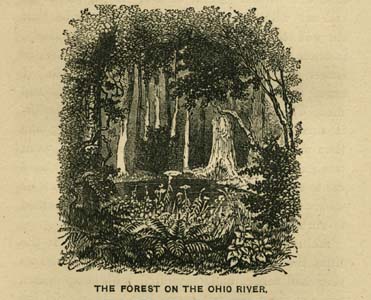
While rising populations and industrialization had begun to transform the transportation infrastructure of northern Kentucky by the mid-nineteenth century, civic projects were hampered by dense forests and the rolling Eden Shale Hills of the Bluegrass region. According to Tenkotte and Claypool, “roads were so poor that a wagon loaded with goods could take as long as two days to travel roundtrip from Florence, Ky., to Covington, a distance of approximately 20 miles” (13). Although state highways, such as the Covington and Lexington Turnpike, began to appear in the 1830s, these few reliable courses immediately attracted heavy travel, offering little discretion to the self-emancipated traveler. The lesser roads of the region were of poor quality, with little signage, which in one case meant that a freedom seeker by the name of Peter Bruner repeatedly got lost and ended up farther south than he began (Lucas 66). As a general rule, transit infrastructure corresponded to the population density of slaveholders, which made Kentucky’s mean travelling conditions a harrowing prospect for any freedom seeker.
Bibliography
Coleman, J. W. J. Slavery times in Kentucky. The University of North Carolina press, 1940.
Klotter, JC, and Friend, C. T. A new history of Kentucky. University Press of Kentucky, 2018.
Lucas, Marion B. A History of Blacks in Kentucky: From Slavery to Segregation, 1760-1891. Kentucky Historical Society, 2003.
Tenkotte, Paul A., and James C. Claypool. The Encyclopedia of Northern Kentucky. University Press of Kentucky, 2009.
Webster, Robert D., and Paul A. Tenkotte. A Brief History of Northern Kentucky. South Limestone, 2019.