
The Freedom Seeker and the Skiff
Far from a technical class of watercraft, the “skiff” of mid-nineteenth century Black biography refers to a broad range of vessels characterized less by their dimensions or capabilities than the hazards that demand their use. A row boat, a canoe, a raft, a dingy, or even a small barge might be called a “skiff,” but period writers generally turn to the term when a small vessel must be procured quickly. While a freedom seeker might construct a skiff in anticipation of flight, the labor would have been time intensive and conspicuous, risking discovery (Johnson 30). More often, they were plucked from riverside moorings, where they appear to have been nearly ubiquitous. Still, if many skiffs were near to hand, their quality was another matter. Many biographies record skiffs sinking mid-journey (Henson 113). The integrity of these small vessels was further tested by cold, rain, wind, and that is to say nothing of the sheer effort of rowing in waters unfamiliar to the pilot (Pickard 291-2). Yet, for all the troubles on the water, every Black oarsman feared to sight a patrol above all else.
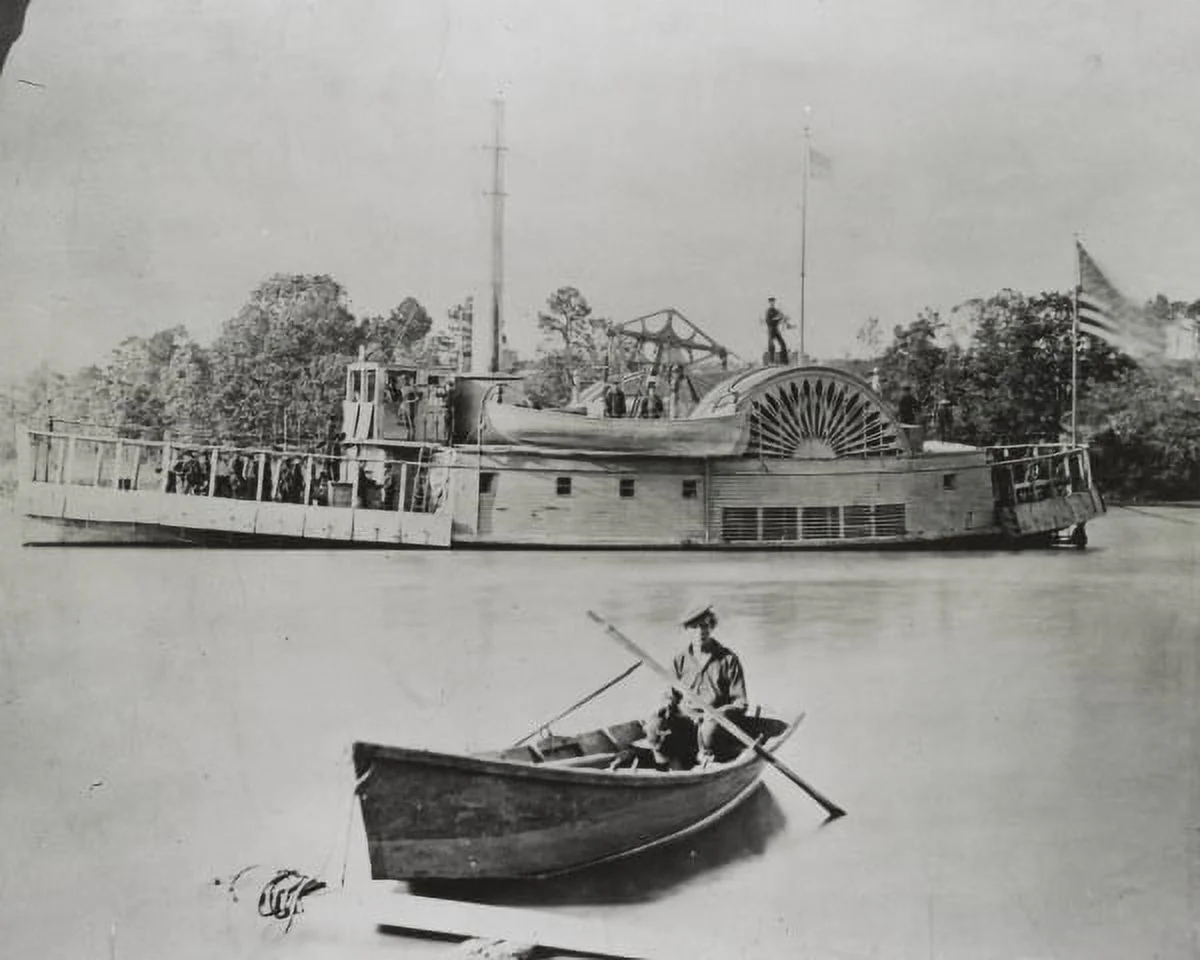
Flight by Water
Due in part to the unreliable roadways of northern Kentucky, skiffs provided an efficient means of traversing what otherwise could be a daunting countryside. Consequently, a skiff could be found reliably around the homesteads and communities along the Tennessee, Cumberland, Salt, Green, Kentucky, and Licking Rivers, as well as along the numerous tributary creeks of the region. Commonplace and rarely guarded, these small boats could be “found,” “got,” “stolen,” or “‘pressed’ into service,” depending on the outlook of the traveler (Drew 362; Anderson 17; Fedric 104; Marrs 56). In some accounts, the act of claiming a lonely vessel from a riverside is reported as a blow against the very institution of slavery, such as in William Wells Browns’ autobiography, where he announces, “The boat was not mine, nor did I know to whom it did belong; neither did I care” (66). At other times, biographers regard skiffs neutrally, as public resources not unlike the electronic scooters of modern American cities.
Because a skiff was a vehicle of opportunity, it militated against any form of detailed planning on the part of the freedom seeker. It was not uncommon to find a skiff short of oars, which compelled travelers to use boards, bits of bark, or their own hands (Twelvetrees 14; Pickard 393). Speedy flight also often meant that family and friends must be abandoned without so much as a goodbye. “For fear of being detected,” James and Jefferson Lightfoot set off by skiff without notifying their parents (Henson 153). As he recorded the brothers’ departure, Henson likely recalled his own river travels on the Ohio, when he watched a friend on the southern bank, “until the darkness seemed to swallow him up” (Bleby 106). Yet, as heartbreaking as it could be to leave friends and family behind, skiffs bore others away from imminent horrors. Sarah Bradford recounts the work of abolitionists from Troy, New York, who through “pulling, hauling, mauling, and shouting” wrested a self-emancipated man from a deputy Marshal and spirited him across the Hudson River by skiff (97).
Navigating Midwestern Waterways
In addition to the challenges of procuring a reliable vessel, Freedom seekers often knew nothing of Midwestern watercourses other than the promise that all eventually flowed into the Ohio from which free northern banks could be seen. Edward Hicks “knew nothing about paddling” when he set off (Drew 267). Israel Campbell had no idea how to maneuver the boat that he claimed and floundered in the middle of the Ohio until a large steamer threw their craft “up and down like an ocean’s wave” (191). Even short journeys could move quickly from difficult to deadly, when these matters of watercraft intersected with the dangers of river currents, hidden rocks, sand bars, flood waters, and—often necessary—the dark of night (Johnson 27; Pickard 291).
Often, those who managed the journey north were beneficiaries of skilled pilots who put their lives at risk to bear freedom seekers north. Although conductors of the Underground Railroad such as Harriet Tubman are hailed for the hundreds of miles they traversed in their service to the freedom seeker, a different form of heroism often transpired on the waterways of the American Midwest. Whereas the conductor often entered into slaveholding states then fled, river pilots of small craft continued to dwell among watchful southern sympathizers. Henry Bleby celebrates one such daring pilot who propelled Josiah Henson northward:
Amongst those who fled from slavery, and found security and prosperity in Canada, was the humble friend who, at the beginning of their flight, put Josiah and his family in a skiff across the Ohio river. Is not this true heroism? Here we have a man, constrained by the love of God, and the love of his fellow-creatures, to put himself and all that is dear to an intelligent mind in jeopardy that he may relieve and save the suffering, open the prison door to the captive, and let the oppressed go free! (158-9)
Henson would remember this same man through the words exchanged before their parting. While less rhapsodic and ennobling, Henson’s writings recall the specific risks at hand:
“but,” said he, “you will not be brought back alive, will you?”
“Not if I can help it,” I answered.
“And if you are overpowered and return,” he asked, “will you conceal my part of the business?”
“That I will, so help me God,” I replied.
“Then I am easy,” he answered, “and wish you success.” (50)
Naturally, the pilot would have worried about his neighbors who might have spied his boat on the river, but he considered the possibility of Henson’s interrogation the greater risk. To abet a fugitive crossing borders carried the death penalty in many slaveholding states, and Henson now bore incriminating evidence as he sought to slip the countless nets of slave patrols and bounty hunters.
Riverbank Patrols
The waterways of the Midwest often cut through thick forests, hilly uplands, and boggy lowlands, thus presenting to the pilot of a skiff a plain route toward freedom–and one that bloodhounds could not follow (Henson 153). However, what was smooth and clear to the freedom seeker was smooth and clear to the patrollers. While slave patrols lingered around crossroads and settlements, they congregated around waterways most frequently. Wharfs and ports were hubs for spies, and the Ohio River hosted regular patrols on both banks, especially near the population centers of Paducah, Evansville, Louisville, and Cincinnati. Hence, the skiff pilot was perhaps never more vulnerable when his craft lay mid-river where he could be spotted over miles of the river’s flat plane. Once spotted, a freedom seeker could expect to be challenged, pursued, or fired upon—to say nothing of the journey beyond (Haviland 116; Pickard 291; Hawkins 59-60). Isaac Johnson defied a patrol even after its gunfire struck his boat: “Fire away! you can’t hit me!” (28) While his words have an air of bravado, defiance more often arose from the desperation of facing a fate worse than death.
Where city met river, a patrol might quickly devolve into a mob, and biographical accounts of river travel reflect the dangers that came with such forms of lawlessness. When the former slaveholder Rev. James A. Thom was traveling to New Orleans by steamer, he witnessed the gruesome behavior of a mob who knew no more than that a Black man was attempting to escape by water. Although nearby pursuers were too afraid to approach the man by skiff, they tried to seize him by increasingly violent means: “They threw a noose rope down repeatedly, that they might pull him up by the neck!…. One of them took a long bar of wood, and leaning over the prow, endeavored to strike him on the head” (158). The man resisted all attempts at capture until, after an hour of relentless harassment, he drowned. Thom reflected on the scene:
One poor man, chased like a wolf by a hundred blood hounds, yelling, howling, and gnashing their teeth upon him–plunges into the cold river to seek protection! A crowd of spectators witness the scene, with all the composure with which a Roman populace would look upon a gladiatorial show. (159)
In this instance, the freedom seeker succumbs to neither physical blow nor restraint but instead is murdered by the collective malevolence of the crowd. While Thom observed this scene from a boat as a bystander—and one who elected not to intervene—other biographies mark the skiff as a site of personal suffering. Richard Hildreth recalls the experience of a woman whose husband had been lynched in Vicksburg and bore her children away from that city by skiff. As she rowed, she would have looked back toward the “passionate fury of the multitude” and the site of the lynching, even as she pulled upon the oars (Hildreth 354).
Bibliography
Anderson, William J. Life and Narrative of William J. Anderson, Twenty-four Years a Slave. Chicago: Daily Tribune Book and Job Printing Office, 1857.
Bleby, Henry. Josiah: The Maimed Fugitive. A True Tale. London: Wesleyan Conference Office, 1873.
Bradford, Sarah H. Scenes in the Life of Harriet Tubman. Auburn, N.Y.: W.J. Moses, printer, 1869.
Brown, William Wells. Narrative of William W. Brown, an American Slave. Written by Himself. London: C. Gilpin, 1849.
Campbell, Israel. An Autobiography. Bond and Free: Or, Yearnings for Freedom, from My Green Brier House. Being the Story of My Life in Bondage, and My Life in Freedom. Philadelphia: The Author, 1861.
Fedric, Francis. Slave Life in Virginia and Kentucky; or, Fifty Years of Slavery in the Southern States of America. London: Wertheim, Macintosh, and Hunt, 1863.
Hawkins, William G. Lunsford Lane; or, Another Helper from North Carolina. Boston: Crosby & Nichols, 1863.
Henson, Josiah. An Autobiography of the Rev. Josiah Henson (“Uncle Tom”). From 1789 to 1881. Edited by John Lobb. London, Ontario: Schuyler, Smith, & Co., 1881.
—. Truth Stranger Than Fiction. Father Henson’s Story of His Own Life. Boston: John P. Jewett, 1858.
Hildreth, Richard. The White Slave; or, Memoirs of a Fugitive. Boston: Tappan and Whittemore, 1852.
Johnson, Isaac. Slavery Days in Old Kentucky. A True Story of a Father Who Sold His Wife and Four Children. By One of the Children. Ogdensburg, N.Y.: Republican & Journal Print, 1901.
Pierson, Emily Catharine. Jamie Parker, the Fugitive. Hartford: Brockett, Fuller and Co., 1851.
Twelvetrees, Harper Ed. The Story of the Life of John Anderson, the Fugitive Slave. London: W. Tweedie, 1863.
Weld, Theodore Dwight. American Slavery As It Is: Testimony of a Thousand Witnesses. New York: American Anti-Slavery Society, 1839.